

CategoriesReal Estate

Built on Discipline. Driven by Scale: The Atlantic Group Origin Story

Built on Discipline. Driven by Scale: The Atlantic Group Origin Story

Every organisation carries an origin story that quietly shapes how it thinks, decides, and executes. For Atlantic Group, that foundation was not built in boardrooms or design studios, but in the demanding, people-intensive world of large-scale security services.

The Group’s early journey began with CISB, a security services enterprise that operated across institutions, infrastructure assets, and sensitive environments nationwide. This was a business that demanded more than manpower, it required discipline at scale. Managing a workforce spread across geographies meant building systems that could withstand complexity: clear command structures, rigorous compliance, continuous training, and zero tolerance for operational lapses. In such an environment, consistency was not optional, it was survival.

Over time, this exposure created a deeply ingrained execution mindset. Leadership decisions were guided by process, accountability, and long-term risk assessment rather than short-term gains. Governance was not treated as a formality, but as a working framework that ensured reliability across thousands of touchpoints. The ability to operate within regulatory boundaries, manage people responsibly, and deliver uninterrupted services became a defining strength.

As CISB scaled, so did the organisation’s understanding of systems-led growth. The leadership recognised that true scale is not achieved by speed alone, but by repeatable processes, internal controls, and disciplined expansion. This understanding would later become the backbone of Atlantic Group’s diversification journey.

The move into real estate and construction was not a departure from this thinking, it was a natural progression. Construction, much like security services, is an execution-heavy domain. It demands coordination across multiple stakeholders, strict adherence to regulations, financial discipline, and long planning horizons. Most importantly, it requires the ability to manage complexity without compromising on quality or timelines.

Atlantic Group entered real estate with the awareness that buildings are long-term commitments, not transactional products. The same governance-first mindset that governed people and institutions was now applied to land acquisition, approvals, engineering decisions, and project execution. Experience from operating at national scale translated into a measured, responsibility-driven approach to development.

In a market often shaped by rankings and listings of the top builders in Mumbai or the best real estate developers in Mumbai, Atlantic Group’s entry into development was guided less by visibility and more by readiness. Rather than positioning itself through volume, the Group chose to build capability first, understanding statutory frameworks, strengthening technical oversight, and establishing controls that ensured predictability in delivery.

Rather than chasing aggressive expansion, the Group focused on building internal capability, reinforcing governance systems, and preparing for long-term growth. This patience reflects the Group’s belief that credibility in real estate is earned slowly and lost quickly.

What distinguishes Atlantic Group’s origin story is not just diversification, but the discipline behind it. The transition from safeguarding institutions to shaping physical environments was guided by a belief that execution excellence is transferable when grounded in strong governance and ethical leadership.

Today, Atlantic Group’s approach to real estate continues to reflect its roots. Decisions are informed by experience, processes are designed to reduce risk, and growth is pursued with a long-term view. The legacy of managing scale responsibly remains embedded in how projects are planned and delivered.

In an industry where trust is built over decades, Atlantic Group’s origin serves as a reminder that strong foundations are not always visible, but they are always felt.



CategoriesReal Estate

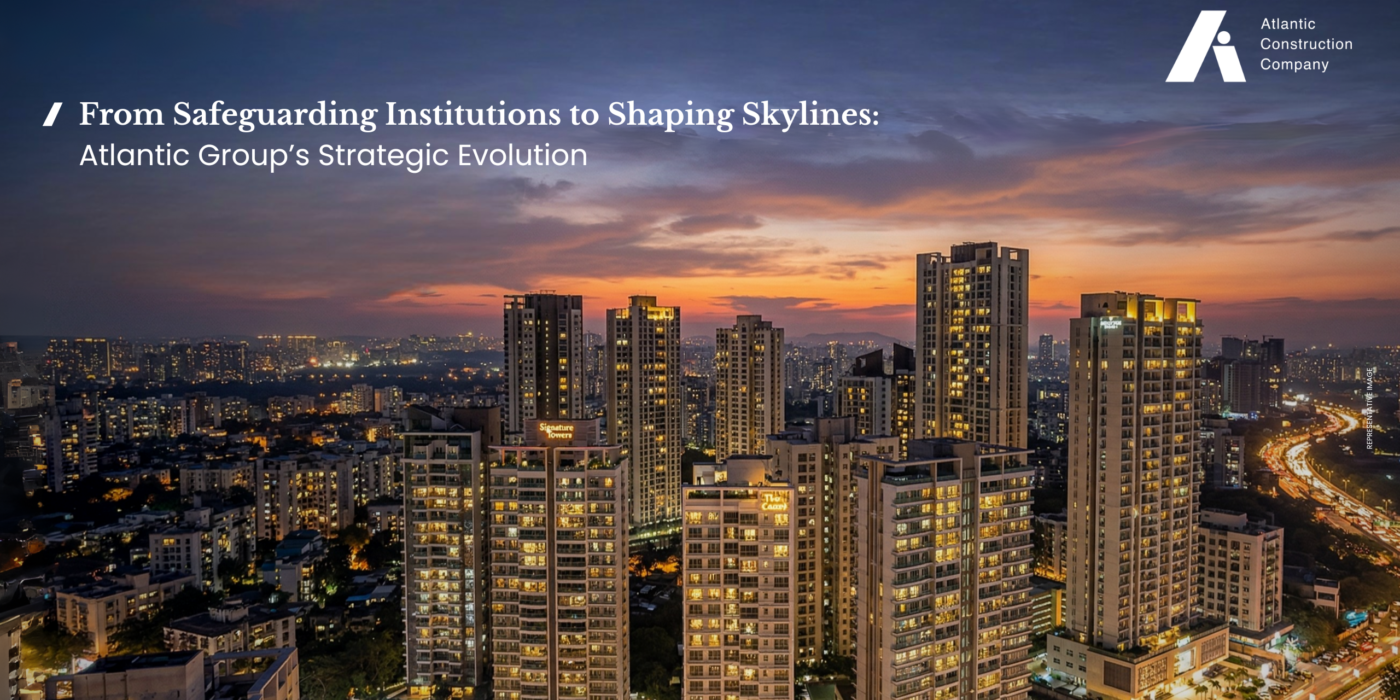
From Safeguarding Institutions to Shaping Skylines: Atlantic Group’s Strategic Evolution

Diversification, when done without clarity, can dilute focus. When done with intent, it becomes evolution. For Atlantic Group, entry into real estate and construction was firmly rooted in the latter  an expansion shaped by experience rather than opportunity chasing.

The Group’s formative years in large-scale security services created an organisational DNA built around people management, risk mitigation, and operational reliability. Safeguarding institutions, infrastructure assets, and sensitive environments required absolute adherence to process. Every deployment, escalation, and compliance check reinforced a culture where failure was not an option and accountability was embedded at every level.

Over time, this exposure sharpened leadership’s understanding of how complex systems function. Large teams, distributed operations, regulatory oversight, and long-term client trust demanded structure over improvisation. Growth was carefully calibrated, supported by governance frameworks that ensured stability even as scale increased. This maturity became the lens through which future opportunities were evaluated.

The move into real estate and construction emerged from this foundation—not as a radical shift, but as a logical next chapter. At its core, construction is a discipline-driven business. It involves coordinating diverse stakeholders, navigating regulatory environments, managing capital-intensive projects, and committing to outcomes that span decades. These were not unfamiliar challenges. They closely mirrored the operational realities the Group had already mastered.

What changed was the asset. Instead of managing people and institutions, the Group began shaping physical environments. Yet the principles remained consistent. Process discipline governed decision-making. Compliance guided execution. Long-term thinking replaced transactional intent. Real estate was approached not as a speculative venture, but as a responsibility.

In a city often defined by conversations around the best builders in Mumbai or the top 10 builders in Mumbai, Atlantic Group chose a quieter route—building institutional capability before seeking visibility. Leadership understood that credibility in construction cannot be fast-tracked. The sector demands patience, technical understanding, and an uncompromising approach to approvals, planning, and execution quality.

Rather than pursuing rapid expansion, the Group focused on building internal systems, strengthening oversight mechanisms, aligning with experienced professionals, and embedding controls that could withstand regulatory and market scrutiny.

This deliberate pace reflected a deeper belief: that real estate development carries a social and economic impact far beyond balance sheets. Buildings shape neighbourhoods, influence lifestyles, and remain long after leadership changes. Such permanence requires a mindset grounded in stewardship rather than scale alone.

The transition also marked a shift from people-led services to asset-led development—but not at the cost of human understanding. Experience in managing large workforces brought a heightened sensitivity to on-ground realities, contractor coordination, workforce safety, and execution timelines. This people-first operational awareness continues to inform how projects are planned and delivered.

Atlantic Group’s evolution demonstrates that diversification does not have to mean reinvention. By transferring proven execution frameworks into a new sector, the Group preserved its core strengths while expanding its impact. Real estate became a platform to apply discipline, governance, and foresight in a domain where these qualities are often tested.

Today, Atlantic Group’s presence in construction and real estate stands as an outcome of measured decision-making rather than market timing. The journey from safeguarding institutions to shaping skylines reflects continuity of thought, not contrast. It reinforces the belief that when experience leads expansion, growth remains sustainable.

This strategic evolution is less about changing industries and more about extending a philosophy, one that values responsibility, structure, and long-term value creation.